 EN
EN
 INA
INA
To Strengthen Graduate Quality, the Biomedical Sciences Doctoral Program at Udayana University's Faculty of Medicine Holds a Curriculum and Academic Guidelines Workshop News and Activities
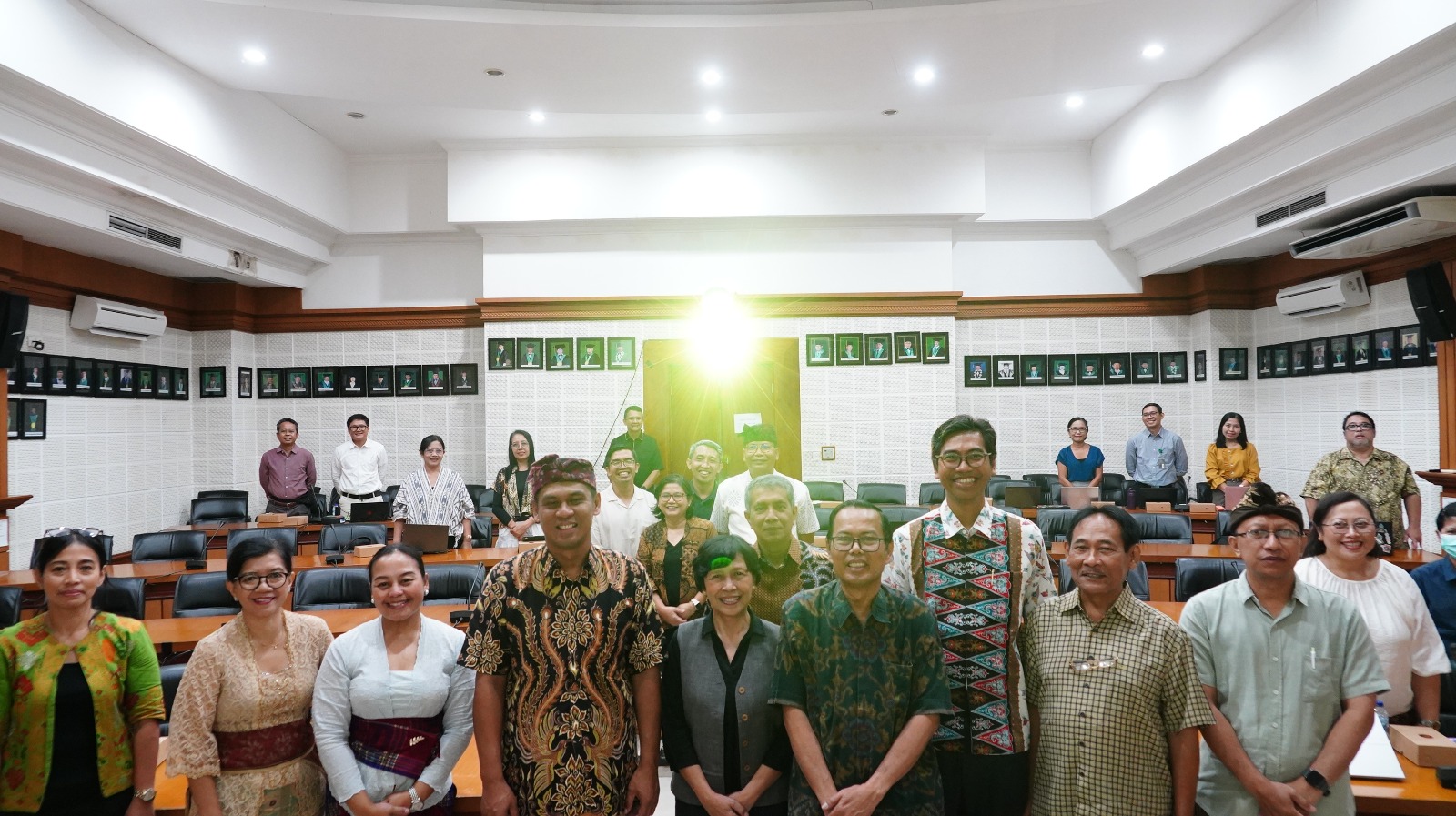
DENPASAR – In an ongoing effort to improve the quality of doctoral education, the Biomedical Sciences Doctoral Study Program, Faculty of Medicine, Udayana University (FK Unud), held a Curriculum and Academic Guidelines Workshop. The event took place in the Prof. Dr. I Goesti Ngoerah Gde Ngoerah Room, FK Unud Building, on Thursday (March 12, 2026).
This workshop served as a strategic forum for study program administrators, students, and graduate users (stakeholders) to align the curriculum with industry needs and the latest scientific developments.
Strategic Commitment of the Study Program and Dean's Office
In his remarks, the Coordinator of the Biomedical Sciences Doctoral Study Program, Prof. Dr. dr. Desak Made Wihandani, M.Kes., emphasized the importance of synergy between the curriculum and students' research focus. "We will conduct a data collection and mapping of lecturers based on their scientific fields and research focus. The goal is for students to select the right supervisor from the start, thus making their dissertation work more focused and effective," explained Prof. Urge.
In line with this, the Dean of the Faculty of Medicine, Udayana University, Prof. Dr. dr. I Gede Eka Wiratnaya, Sp.OT., Subsp.Onk.Ort.R(K)., in his opening remarks provided crucial guidance regarding study efficiency. He encouraged students to be more strategic in managing their credit load.
"Complete a large credit load early in the study period. Don't pile it up at the end, which risks delaying graduation and burdening administrative costs. Our target is an efficient study period, namely graduating on time in 2.5 years," emphasized Prof. Eka.
Research Innovation and International Publications
Prof. Eka also highlighted the important role of the Research Group and Academic Supervisors in mapping the direction of students' research. Furthermore, he strongly encouraged improving the achievement of Key Performance Indicators (KPIs) through scientific publications at the global level.
"We must have the courage to aim for Scopus Q1 journals with a percentile above 90%. Incentive support has been prepared by the government and universities. Furthermore, I hope that future open examinations can become a platform for downstream research by inviting industry partners, so that student research can have a real impact on society and open up funding opportunities," added Prof. Eka.
Collaborative Discussion
After the opening session, the event continued with an in-depth presentation on the grade conversion mechanism in the Doctorate by Research program and draft curriculum changes by Dr. I Wayan Sumardika, S.Ked., M.Med.Ed., Ph.D., as well as a presentation on the Academic Guidelines by Prof. Desak Made Wihandani.
The event was attended by various important parties, including representatives from the Bali Provincial Health Office, Prof. Dr. I.G.N.G. Ngoerah General Hospital, Udayana University Hospital, as well as lecturers and students from the Doctoral Program in Biomedical Sciences, Faculty of Medicine, Udayana University. The workshop concluded with an interactive discussion session that generated various constructive input for the institution's advancement.
UDAYANA UNIVERSITY