 EN
 INA
Biomedical Sciences Doctoral Candidate Investigates Natural Product-Based Combination Therapy for Malaria Resistance News and Activities
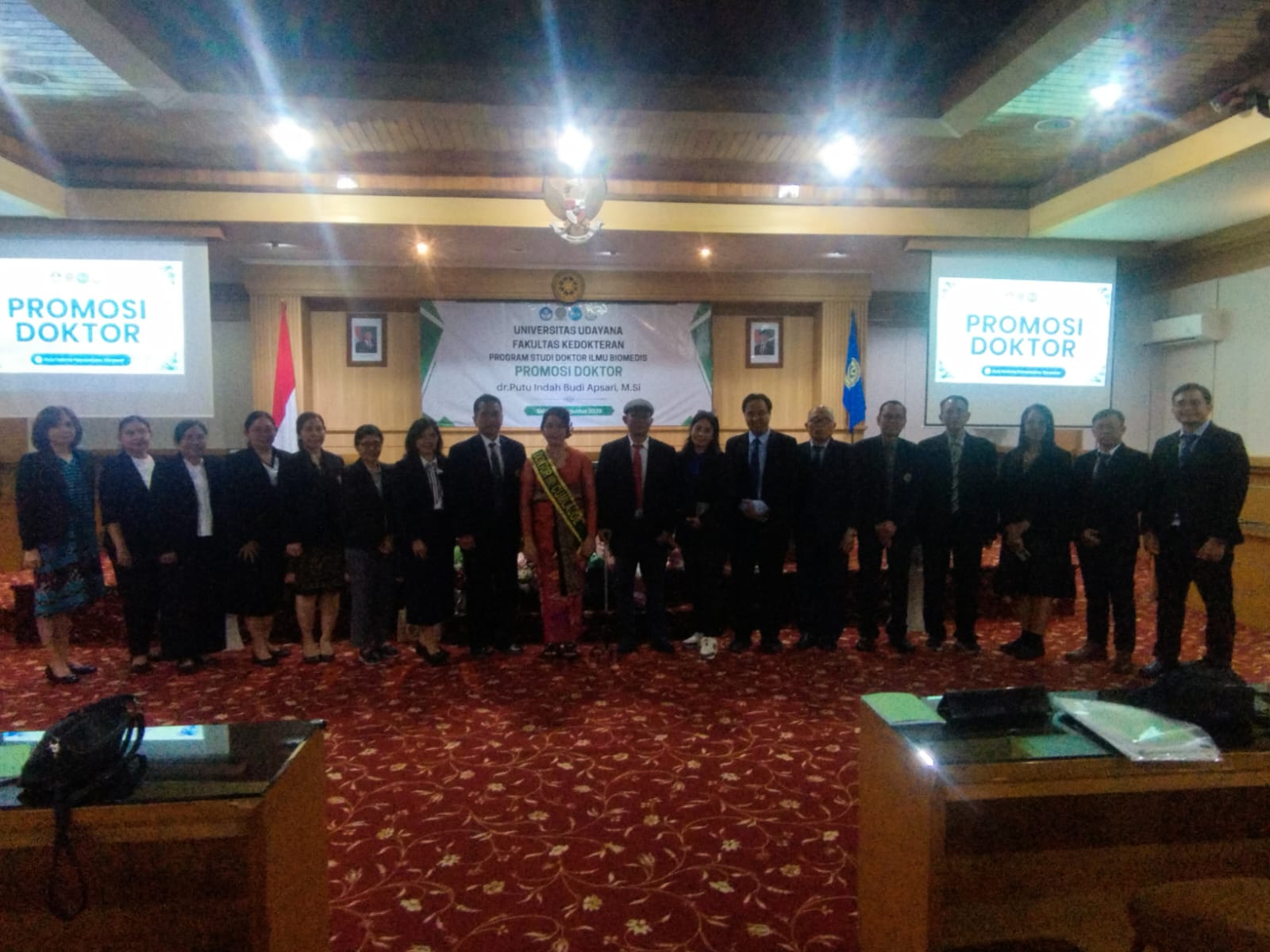
Held at the Postgraduate Meeting
Room (3rd Floor, Postgraduate Building, Udayana University, Denpasar), the
Doctoral Study Program in Biomedical Sciences at the Faculty of Medicine,
Udayana University, conducted an open doctoral defense for candidate Dr. Putu
Indah Budi Apsari, M.Si. Her dissertation is titled "Andrographolide as a
Potential Agent in Artemisinin Combination Therapy to Overcome Malaria
Resistance" (August 18, 2026).
Antimalarial resistance poses a
global challenge to malaria elimination efforts worldwide. Artemisinin
resistance in *Plasmodium falciparum* is characterized by a failure to
eradicate the parasite or a delay in parasite clearance from the blood.
Underlying mechanisms of Artemisinin resistance include mutations in the *kelch
13* (K13) gene, increased expression of *Autophagy-related gene 8* (ATG8),
modulation of Reactive Oxygen Species (ROS) pathways—specifically through
elevated levels of Superoxide Dismutase (SOD) and Catalase enzymes—and immune
system activation. K-13 gene mutations and increased ATG8 expression play a
role in regulating proteostasis and the synthesis of proteins essential for
parasite survival. Reduced ROS production diminishes Artemisinin activation,
thereby allowing the parasite to survive. Furthermore, immune system activation
via Nuclear Factor-kappa B (NF-kB) triggers an excessive release of the
cytokine Tumor Necrosis Factor-alpha (TNF-?), leading to more severe symptoms
in the host. Andrographolide, an active compound derived from *Andrographis
paniculata*, possesses known antimalarial activity; while numerous studies have
reported its potential as an antitumor, anti-inflammatory, antioxidant, and
anti-sclerotic agent, the specific mechanism by which it prevents Artemisinin
resistance has not yet been fully elucidated. This study aims to unravel the
mechanism by which Andrographolide prevents *Plasmodium* resistance to
Artemisinin. The research employed an *in silico* docking approach using
AutoDock 4.2 to evaluate biochemical reactions and ligand-receptor
interactions, assessing the potential of andrographolide to inhibit oxidative
stress, autophagy, and immune pathways via AutoDock 4, Biovia, and GROMACS
software. An *in vivo* study utilized 20 *Mus musculus* (BALB/c) mice infected
with *Plasmodium berghei*, divided into four groups: a negative control (no
drug), a positive control (artesunate at 0.8 mg/30 g body weight), Treatment
Group 1 (andrographolide at 10 mg/30 g body weight), and Treatment Group 2 (a
combination of artemisinin and andrographolide at the same dosages). Parameters
assessed included the gene expression of K13, ATG8, and NF-?B via quantitative
Polymerase Chain Reaction (qPCR), catalase enzyme expression via immunohistochemistry,
and parasitemia levels. Data analysis was performed using ANOVA with a
significance level of p< 0.05.
The results demonstrated that the parent compound andrographolide, as well as its derivatives and phase 1 and 2 metabolites, exhibited strong binding affinities
UDAYANA UNIVERSITY