 EN
 INA
Biomedical Science Doctorate Studies Lean Ergonomics to Improve Productivity and Occupational Health in Tempeh MSMEs News and Activities
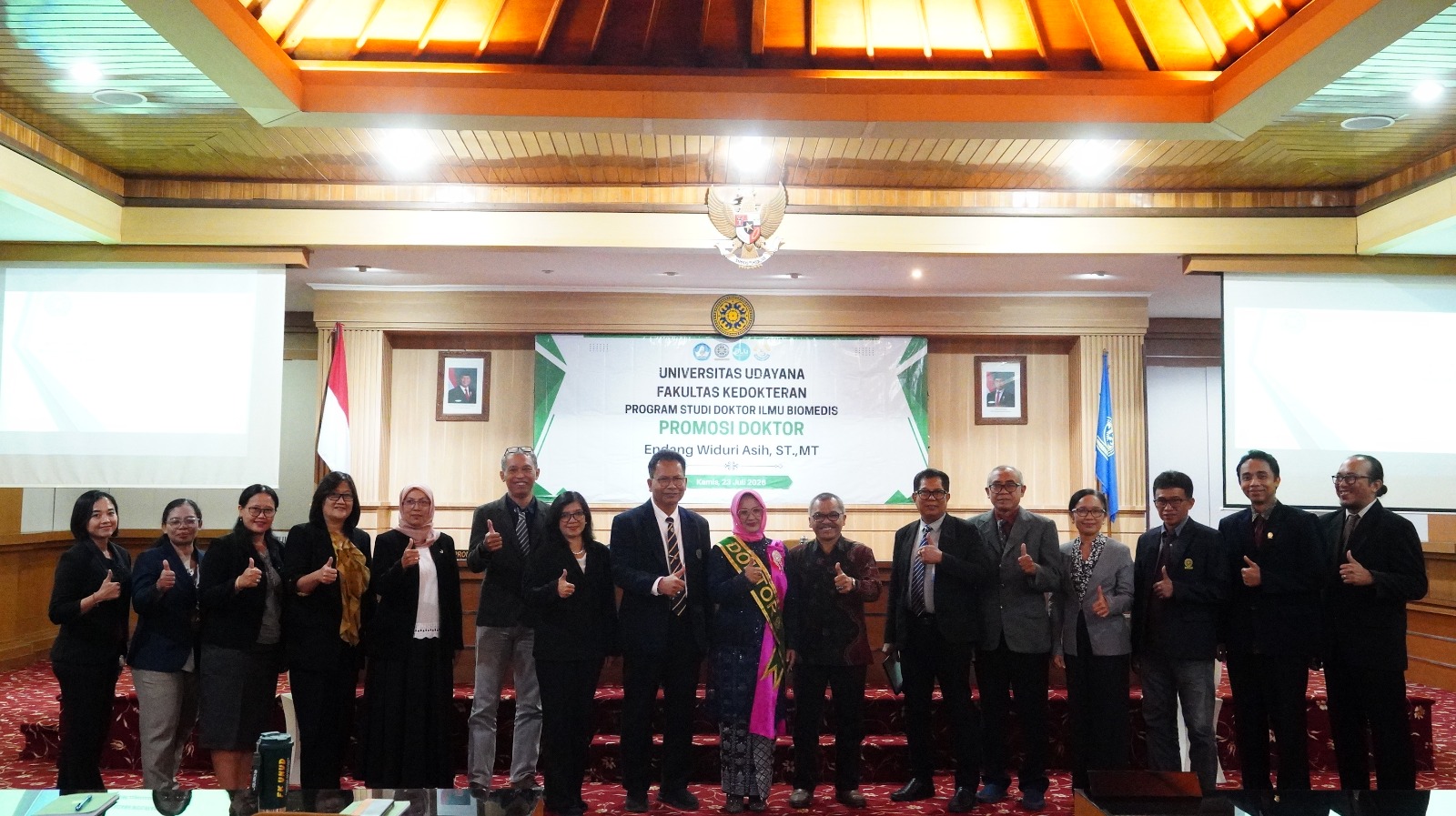
Held in the Meeting Room on the
Third Floor of the Postgraduate Building, Udayana University, Jl. PB Sudirman,
Denpasar, Bali, the Biomedical Science Doctoral Study Program, Faculty of
Medicine, Udayana University, held an open doctoral promotion defense with
Endang Widuri Asih, ST., MT., as the dissertation candidate, entitled
"Implementation of Lean Ergonomics Based on a Total Ergonomics Approach to
Reduce Physiological Responses and Loads, and Work Waste to Improve the
Performance of Tempeh MSMEs." (July 23, 2026)
Tempheeh MSMEs are a food
industry sector still dominated by manual activities characterized by
repetitive work, unergonomic work postures, and high levels of wasted movement
and work time. These conditions have the potential to increase physiological responses,
workload, musculoskeletal complaints, muscle tension, and fatigue, ultimately
impacting productivity and business revenue. This study aims to analyze the
effectiveness of implementing Lean Ergonomics based on a Total Ergonomics
Approach in reducing physiological responses, workload, and work waste, while
improving performance in tempeh MSMEs.
This is an experimental study
with a treatment-by-subject design. The study was conducted at a tempeh MSME in
Ngestiharjo village, with a sample of 16 individuals selected based on
inclusion and exclusion from January to October 2025.
The first stage of the
experimental study was measurement in Period P1, which measured working
conditions before implementing Lean Ergonomics Based on Total Ergonomics. The
second stage involved a washout period (WOP) and adaptation, consisting of one
day of WOP and three days of adaptation. The third stage was measurement in
Period P2, which measured working conditions with the implementation of Lean
Ergonomics Based on Total Ergonomics. Measurements in Periods P1 and P2
included musculoskeletal complaints using the Nordic Body Map questionnaire,
fatigue using the Industrial Fatigue Rating Committee (IFRC) questionnaire,
muscle tension using electromyography (EMG), workload using pulse rate, wastage
using a time and motion study, and productivity using standard time. Pre- and
post-study data in Periods P1 and P2 were analyzed using a paired t-test at a
5% significance level.
The results of the study on the
implementation of Total Ergonomics-Based Lean Ergonomics in Tempe MSMEs showed
a 10.06-point reduction in musculoskeletal complaint scores, or 25.5% (p<
0.05), a 4.26% reduction in right upper trapezius muscle tension, a 4.27%
reduction in left upper trapezius muscle tension, a 2.11% reduction in right
lumbar muscle tension, and a 2.13% reduction in right lumbar muscle tension.
Furthermore, there was a 26.6% reduction in working time (p< 0.05). Fatigue
scores decreased by 9.37 points, or 22.14%, and workload decreased by 66.6%.
Implementing Lean Ergonomics Based on Total Ergonomics can also increase worker
productivity by 35%. It can also increase worker income by 30.9% and employer
income by 30.9%.
It was concluded that
implementing Lean Ergonomics based on the Total Ergonomics Approach is an
effective intervention model in reducing physiological responses, workload, and
work waste while simultaneously improving health, safety, productivity, and business
performance in tempeh MSMEs. These findings strengthen the development of the
Lean Ergonomics concept based on the Total Ergonomics Approach as an approach
that integrates process efficiency and occupational health to increase the
competitiveness of MSMEs.
The examination was led by Prof.
Dr. dr. Desak Made Wihandani, M.Kes., Coordinator of the Doctoral Study Program
in Biomedical Sciences, Faculty of Medicine, Udayana University, with the
following examiners:
1. Prof. Dr. dr. I Putu Gede
Adiatmika, M.Kes. (Promoter)
2. Prof. Dr. dr. I Made Muliarta,
S.Ked., M.Kes. (Copromoter I)
3.Dr. Ir. Ida Bagus Alit
Swamardika, M.Erg., IPM, ASEAN.Eng. (Copromoter II)
4. Prof. Dr. Ir. Made Sudarma,
M.A.Sc., IPU., ASEAN.Eng.
5. Prof. Dr. Ir Lilik Sudiajeng,
M. Erg.
6. Prof. Dr. Dr. Susy Purnawati,
MKK.
7. Dr. dr. Luh Putu Ratna
Sundari, M. Biomed.
8.Dr. Drs. I Wayan Santiyasa,
M.Sc.
9.Dr. drh. I Made Subrata, M.
Erg.
10.Dr. Dr. I Putu Adiartha
Griadhi, M.Fis., AIFO., S.Ked.
With academic invitations:
1. Dr. Ir. I Gusti Ngurah
Priambadi, MT.
2. Dr. Ns. Ni Ketut Guru Prapti,
S.Kep., MNS.
3. Dr. dr. Nila Wahyuni, M.Fis.
4. Dr. dr. I Made Krisna Dinata,
M.Erg.
5. Dr. Ns. Putu Oka Yuli
Nurhesti, S.Kep., M.M., M.Kep.
In this examination, Dr. Endang Widuri Asih, ST., MT., was declared the 502nd Doctoral Graduate of the Biomedical Sciences Doctoral Study Program, Faculty of Medicine, Udayana University, with a Very Satisfactory Grade
UDAYANA UNIVERSITY